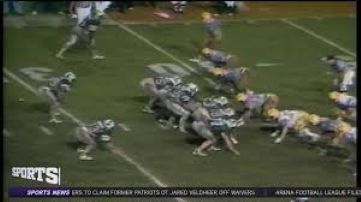
(Dec. 14)
This newspaper’s editorial board was absolutely right on Dec. 9 to suggest a renewal of annual football games between Tulane and LSU. The benefits could accrue not just to the two football programs, but to the whole state.
Let’s flesh out the “why” and the “how” of this idea, with some history and perspective thrown in.
Start with how fun it could be again to have a major in-state rivalry. To show what a crowd an annual game could attract, the editorial mentioned the then-record, and still astonishing, attendance of 86,598 at the LSU-Tulane game in Tulane Stadium on Dec. 1, 1973. Amazingly, that game came not on the heels of an evenly matched rivalry, but after 24 consecutive wins by LSU. If a game could mean so much even when ordinarily non-competitive, imagine what a revival could mean if both teams are regular winners and if both schools hype it up.
That huge amount of interest, by the way, wasn’t a one-time thing: The prior year, also at Tulane Stadium (for reasons I don’t understand), drew such a large crowd that those who couldn’t get tickets filled an auditorium at the old Rivergate building on the site that now hosts Caesars Casino. LSU held on in that game, 9-3, when its safety Frank Racine tackled Tulane’s Bill Huber one yard short of a touchdown on the game’s final play.

A decade later, when Tulane’s Reggie Reginelli tight-roped his way 31 yards up the sideline late in the fourth quarter for a 31-28 Green Wave victory, it marked the culmination of 11 straight years of fierce, uber-competitive games. At some grade schools, students each year wore either Tulane or LSU colors the day before the big match. There’s no reason that sort of atmosphere can’t return.
Imagine the potential for TV ad sales and a paraphernalia market statewide that could grow up around a yearly Tulane-LSU scrum. Imagine, if both teams remain winning programs, some national coverage. Play the game a few weeks into the season, so the losing squad could still recover in the rankings for the College Football Playoff, but where both teams would garner more “strength of schedule” points for playing each other than for playing, say, Western Kentucky or South Alabama. Or perhaps Tulane could replace Ole Miss with LSU – one SEC opponent for another, but with far greater statewide interest….. [The full column is at this link.]